Call for Code
AI 2026
[ Where Trusted AI Is Built, Tested, and Deployed — for Humanity ]
A proven global platform
now built for AI

The most urgent problems on earth need the most skilled people on earth.
Call for Code AI builds on the largest engagement of developers of its kind, and points it at the defining challenge of our era: AI that can be trusted at global scale.
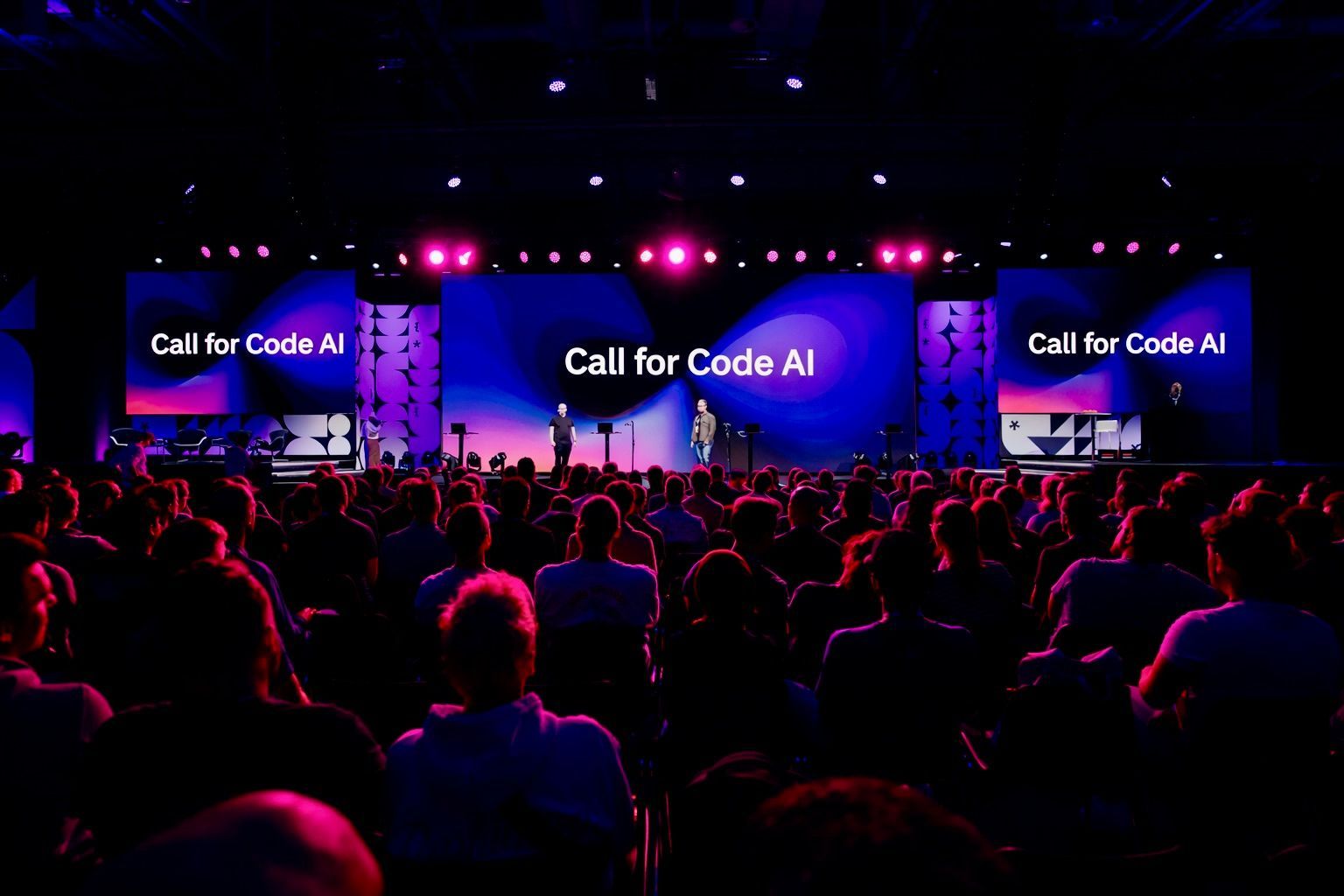
Call for Code launched at VivaTech in Paris in 2018, with an assist from French President Emmanuel Macron. IBM was the founding partner, UN Human Rights the global impact partner, and the Linux Foundation the open source partner.
In nine years, more than one million developers across 190+ countries built over 50,000 applications. The strongest were recognized at the United Nations and deployed in real communities. Developers owned their intellectual property and chose their own path: some built sustainable businesses, others open-sourced their work through the Linux Foundation.
Project OWL restored emergency communications in Puerto Rico after Hurricane Maria. Prometeo brought AI-powered health monitoring to firefighters battling wildfires in Spain. Neither stayed an idea. This platform doesn’t just surface ideas. It sees them through.
From capability to accountability
AI is already embedded in the systems that shape daily life — healthcare decisions, financial access, emergency response, public infrastructure. The question is no longer what AI can do. It is whether the systems making those decisions can be tested, trusted, and held to account.
Call for Code AI is built for that question. A neutral proving ground for frontier AI systems — evaluating performance, safety, scalability, and alignment with human rights standards.
Not a hackathon. Structured infrastructure for responsible AI deployment at global scale.
Built at scale.
Structured for trust.
Positioned for impact.
1M+
Developers engaged
190+
Countries represented
9
Global Challenges
75+
Spot Challenges
50K+
Solutions created
60M+
Ecosystem investment

Open-source stewardship through The Linux Foundation

Formal collaboration with United Nations Human Rights embedding global standards

Real-world deployment pathways beyond prototype
The infrastructure is in place. The institutional relationships are established. The track record spans nine years and every major sector.
The global challenge.
Rapid activation.
The Call for Code AI Global Challenge mobilizes developers, enterprises, universities, and global institutions to build AI solutions designed for real-world deployment — not proof-of-concept, but production.
Solutions are developed in the open, validated through institutional frameworks, and the strongest are elevated to a global stage: and supported toward deployment in communities worldwide.
Alongside the Global Challenge, Spot Challenges enable rapid mobilization around urgent issues as they emerge — operating within the same governance framework so that speed and accountability are never in conflict.
Founder statement
Call for Code began with a conviction: developers are the quiet architects of the world we live in, and given the right partners and the right stage, they would build the one we need.
With IBM, the Linux Foundation, UN Human Rights, and more than 120 ecosystem partners worldwide, we turned that conviction into infrastructure. Students at more than 100 universities joined in. Over nine years, more than one million developers in 190+ countries built over 50,000 solutions.
The developers and innovators owned their intellectual property and decided for themselves how to develop it. Some of the top innovations became sustainable, ongoing businesses. Others were open-sourced for the world.
The work drew support from illustrious figures, from President Bill Clinton and President Emmanuel Macron to Linus Torvalds and Lady Gaga, and it was covered by major media outlets around the world. But the developers were always the driving force, and that is why Call for Code became known as the Nobel for developers.
AI now sits inside healthcare, manufacturing, finance, energy, and emergency response. Building it is no longer the hard part. Trusting it is. That means testing how it works, understanding where it fails, and holding it accountable. Our conviction hasn’t changed: the developers who build AI are the ones best placed to build the tools that make that possible.
Now, as we enter our 10th year, we are excited to engage AI-native developers and innovators to use technology to elevate the human condition.
— David Clark, Founder & CEO


Questions & Answers
[ About CFC AI ]
About Call for Code AI
A global platform connecting developers, enterprises, and institutions to build trusted AI solutions — and deploy them. Over nine years, more than one million developers across 190+ countries have built 50,000+ solutions addressing climate, public health, justice, and human rights. The strongest are recognized by the United Nations and open-sourced for the world.
[ Why CFC AI ]
Why Call for Code AI?
AI will reshape every sector of society. The question is whether it serves the public good or operates without accountability. Call for Code AI exists to answer that — connecting the world's builders to real-world needs within a framework designed for trust.

[ 2026 CFC AI ]
About 2026
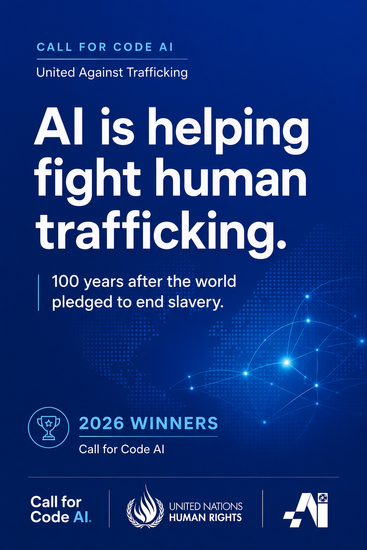
The 2026 Call for Code Global Challenge mobilized developers worldwide against one of the most urgent human rights problems of our time — one hundred years after the world first moved to abolish it.
Marking the centenary of the 1926 Slavery Convention, Call for Code AI: United Against Trafficking was built with global impact partner United Nations Human Rights and Austin AI Hub to detect, prevent, and disrupt human trafficking with responsible AI.
A century after that first commitment, the work is unfinished. The Challenge launched June 11. Winners were recognized July 30 —
UN World Day Against Trafficking in Persons.
[ Open Source ]
Open Source Deployment & Global Collaboration
The Linux Foundation has been the Open Source Program Affiliate of Call for Code since 2018. Leading Call for Code innovations have been supported, advanced, and housed within the Linux Foundation ecosystem — helping winning technologies move beyond prototypes into open, collaborative development environments where they can scale.
Beyond hosting, the Linux Foundation has served as the open source backbone of the program — enabling the transparency, sustained development, and global collaboration that turn one-off solutions into durable platforms. The relationship has also included participation from Linus Torvalds, the creator of Linux, who has served as a Call for Code juror.
About The Linux Foundation
The Linux Foundation is the world's leading home for collaboration on open source software, hardware, standards, and data. Linux Foundation projects are critical to the world's infrastructure including Linux, Kubernetes, Node.js, ONAP, OpenChain, OpenSSF, OpenStack, PyTorch, RISC-V, SPDX, Zephyr, and more. The Linux Foundation is focused on leveraging best practices and addressing the needs of contributors, users, and solution providers to create sustainable models for open collaboration. For more information, please visit us at linuxfoundation.org.